
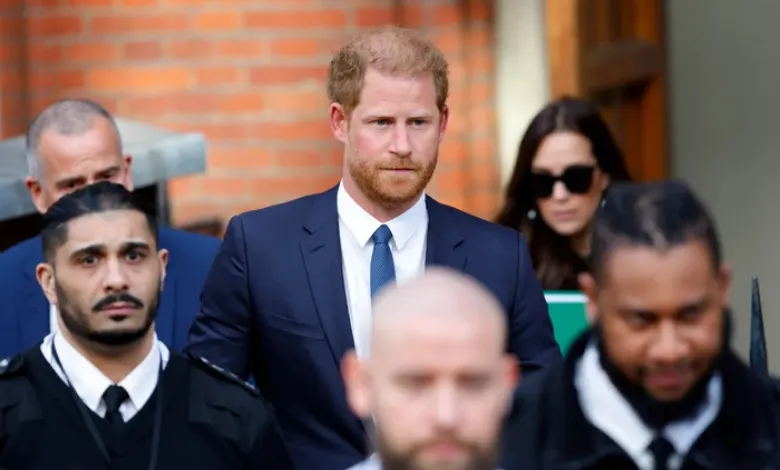
Prince Harry’s ongoing legal battle with the publisher of the Daily Mail has hit a turbulent patch after a High Court judge issued a sharp rebuke over the way his legal team—and those of several other celebrity claimants—have handled the disclosure process.
In a ruling delivered on Friday, Mr Justice Nicklin ordered Prince Harry and six other high-profile individuals to hand over key documents showing payments or incentives allegedly offered to witnesses supporting their claims against Associated Newspapers Limited.
The judge criticised the group’s “inconsistent and incoherent approach,” saying their explanations for the missing documents were “unconvincing” and that “there are serious questions to be answered” about the conduct of their research team.
This latest development could shift the direction of the case, especially with a nine-week trial looming in January 2026. The judge noted that the requested documents could provide Associated Newspapers with grounds to question the credibility of certain witnesses.
Prince Harry is not alone in the case. He is joined by actress Elizabeth Hurley, singer Sir Elton John and his husband David Furnish, actress Sadie Frost, campaigner Baroness Doreen Lawrence, and former politician Sir Simon Hughes. Together, they accuse the publisher of widespread unlawful activities stretching from 1993 to 2018.
Among the serious allegations: phone tapping, placing secret recording devices in vehicles, using deception to obtain private records (“blagging”), even commissioning burglaries to gather personal information. The claims relate to 53 articles across the Daily Mail and Mail on Sunday, and involve more than 80 journalists, editors, and executives.
Associated Newspapers has strenuously denied the accusations, calling them “lurid” and “simply preposterous.”
The recent ruling stems from a hearing in May, during which Associated’s legal team, led by barrister Antony White KC, presented documents showing that payments were indeed made—or at least offered—to individuals in exchange for evidence.
One notable claim involves a £5,000-per-month arrangement with private investigator Gavin Burrows, allegedly organised by the claimants’ own research team.
Justice Nicklin has now ordered the claimants to search for and disclose any documents that could support a theory that witnesses were offered financial incentives. “Ultimately, the issue of whether the payment or inducement does affect the credibility of any witness is a matter to be resolved at trial,” the judge stated.
In a separate instruction, the court also called for the “targeted” un-redaction of Associated Newspapers’ internal documents. This move aims to determine whether certain journalists had a consistent pattern of engaging in unlawful newsgathering tactics.
But the scrutiny isn’t only on Associated’s side. The claimants, including Prince Harry, must now also provide more evidence surrounding their so-called “personal watershed moments”—that is, when they first discovered they might have grounds to sue.
Justice Nicklin said he was surprised by the lack of documentation around these key moments. He noted that such emotional and life-changing discoveries would likely have resulted in “communications between trusted friends and family members; messages seeking advice or guidance, or expressing shock or outrage.”
One such moment was referenced in a text message Prince Harry reportedly sent to Baroness Lawrence, sharing “information” that had emerged. This was later followed by an email citing new material found by his barrister, David Sherborne.